
The enterprise software market is currently undergoing a massive transformation. For years, businesses have relied on “systems of record” to store data and “systems of engagement” to talk to customers.
However, we are now entering the era of the “system of agency.” This is where artificial intelligence moves beyond simply answering questions and begins to actually execute work.
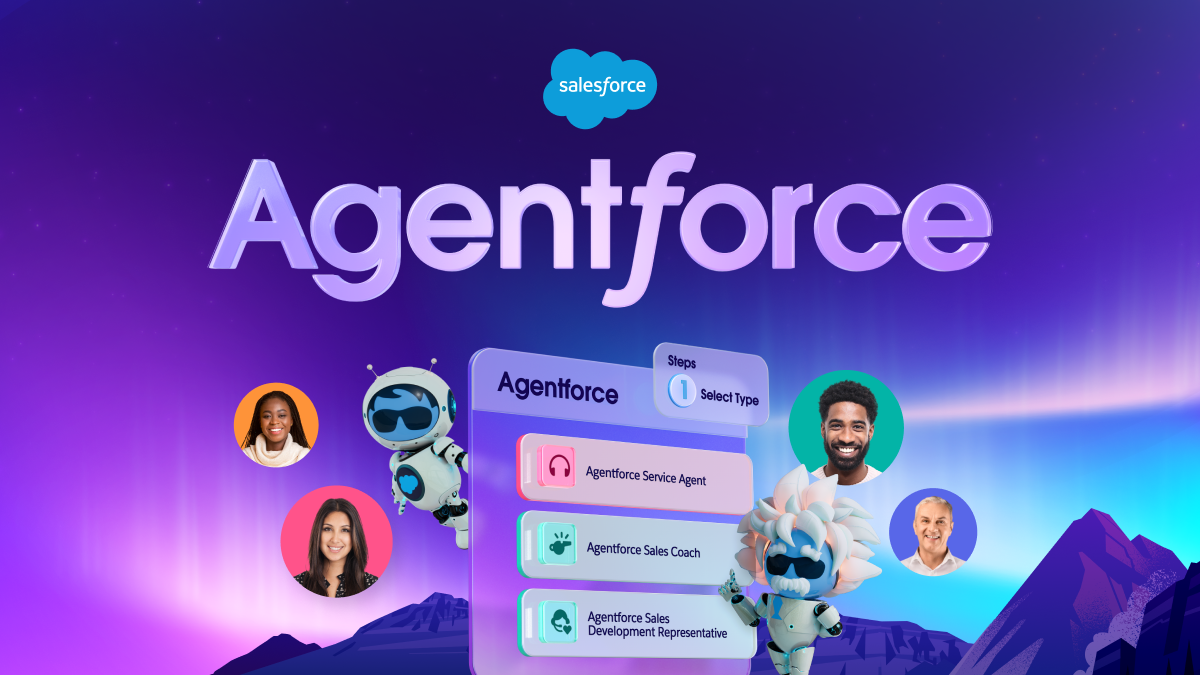
Salesforce Agentforce is at the heart of this shift, representing a fundamental change in how companies scale their operations.
Salesforce Agentforce is a groundbreaking platform that allows businesses to deploy autonomous AI agents. These agents are designed to handle complex, cross-functional tasks, ranging from customer service to sales prospecting without requiring continuous human oversight.
Unlike traditional software that requires manual input, Agentforce is built to “think” and “act,” making it the next logical step in the AI revolution.
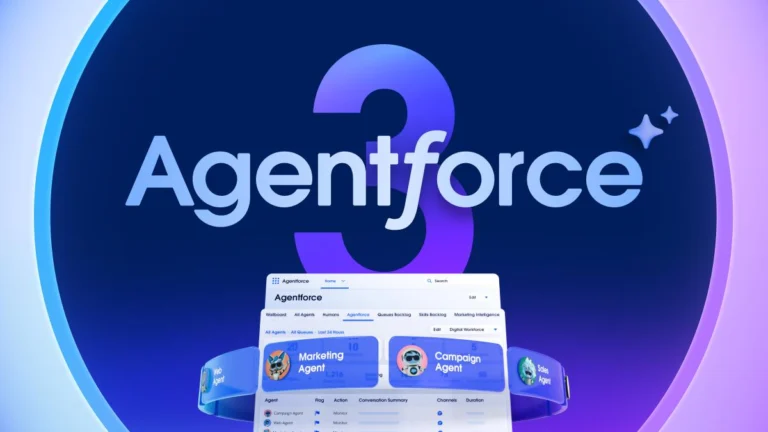
Salesforce Agentforce is a platform that allows you to build a “Digital Workforce.” While we have used chatbots for years, those were limited by rigid scripts and buttons.
Agentforce is different because it is powered by reasoning, meaning it can handle unpredictable human conversations and find its own way to a solution.
In technical terms, Agentforce is an orchestration layer that sits on top of the Salesforce platform. It combines a reasoning engine with your company’s unique data and metadata.
The core concept here is “Agentic AI,” which refers to AI that has the agency to make decisions based on a set of permissions and goals provided by the administrator.
If you want to explain Agentforce to someone without a technical background, it is best to use a workplace analogy. Think of Agentforce as a highly skilled new hire who has read every single document in your company’s history and has permission to use your internal tools.
To help simplify the concept further, consider these three pillars of the Agentforce experience:
The move toward AI agents isn’t just a trend; it is a response to the “productivity gap” that many modern enterprises face. As companies collect more data, human teams are becoming overwhelmed by the sheer volume of information they need to manage.
Salesforce recognized that to stay relevant, they needed to provide tools that don’t just show data but actually use that data to drive outcomes. Businesses today are investing in these agents because they solve three major problems:
To understand where Agentforce fits, we must look at how Salesforce has matured over the decades. It hasn’t been a sudden jump; rather, it has been a steady climb toward higher levels of intelligence and autonomy.
The roadmap of Salesforce AI can be broken down into these distinct stages:
The power of Agentforce doesn’t come from a single feature, but from the integration of several high-tech components that work together in real-time.
These features allow the agent to behave less like a computer program and more like a functional member of your team.
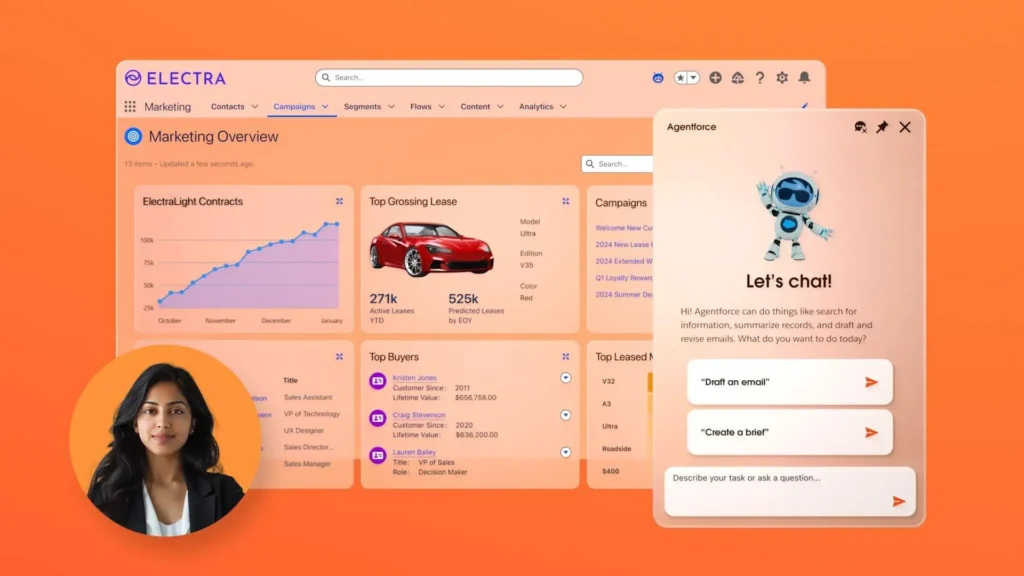
The most significant feature is the ability for these agents to operate autonomously. They don’t wait for a human to trigger a “workflow.”
Once a goal is set, such as “help the customer return their shoes,” the agent takes over. It checks the return policy, validates the purchase date, and generates the QR code for the return, all on its own.
An agent is only as good as the information it can access. Agentforce is natively connected to Salesforce Data Cloud, which allows it to process information as it happens.
Because it operates in real-time, the agent can react to:
One of the biggest advantages of Agentforce is that it lives inside the Salesforce ecosystem. You don’t have to “connect” it to your CRM; it is already there.
It has immediate access to your Sales Cloud, Service Cloud, and Marketing Cloud, ensuring that every action the agent takes is instantly reflected in your customer records.
The internal logic of an agent is much more complex than a standard chatbot. It follows a cycle of “Reasoning” that allows it to stay on track even when a customer changes their mind or provides complicated information.
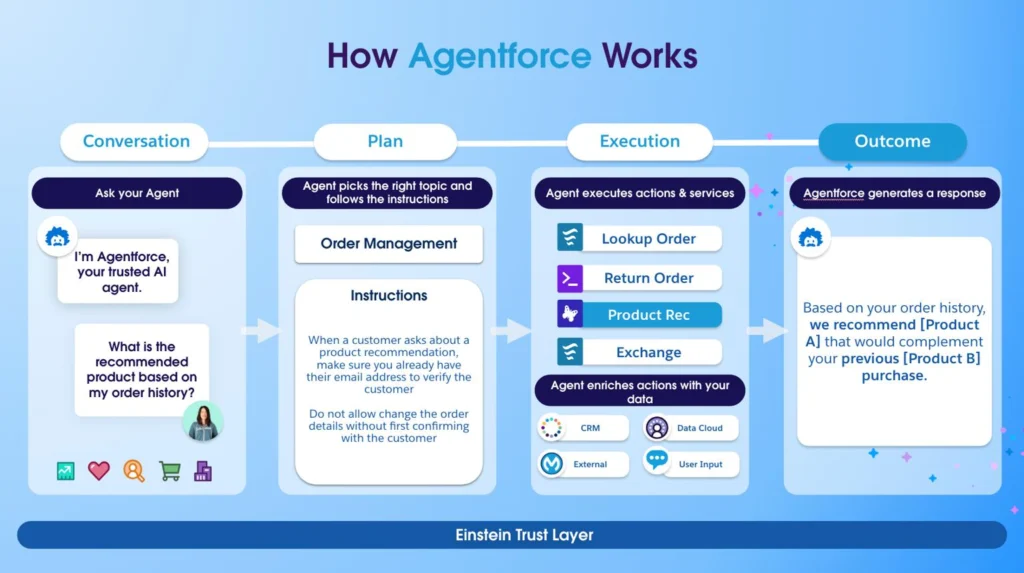
The first step in the process is called “Grounding.” When a customer asks a question, the agent searches your private company data to find the facts.
It does not rely on assumptions or “hallucinations,” as it is grounded in your organization’s verified knowledge articles, documentation, and CRM records. It ensures that the advice it gives is 100% accurate to your business.
Once the agent has the facts, it uses the Atlas Reasoning Engine to make a decision. Unlike old-fashioned bots that follow a “tree” (If yes, go to step 2; if no, go to step 3), the Atlas engine creates a custom plan for every unique interaction.
It evaluates the best “tool” to use based on the specific nuances of the customer’s request.
The final step is the “Act” phase. After the agent decides on a plan, it executes it using Salesforce Actions. It could involve:
While the technology behind Agentforce is universal, Salesforce has created specialized versions of these agents to meet the specific needs of different business departments. This “Deep Dive” explores the variety and technical foundation of these agents.
Salesforce offers “out-of-the-box” agents that are pre-configured with the skills needed for specific roles. These include:
The “secret sauce” that allows these agents to communicate so effectively is a combination of Natural Language Processing (NLP) and Machine Learning (ML).
These technologies work in tandem to ensure:
When a business moves from manual processes to Agentic AI, the impact is felt across the entire organization. It isn’t just about saving money; it’s about improving the quality of every interaction.
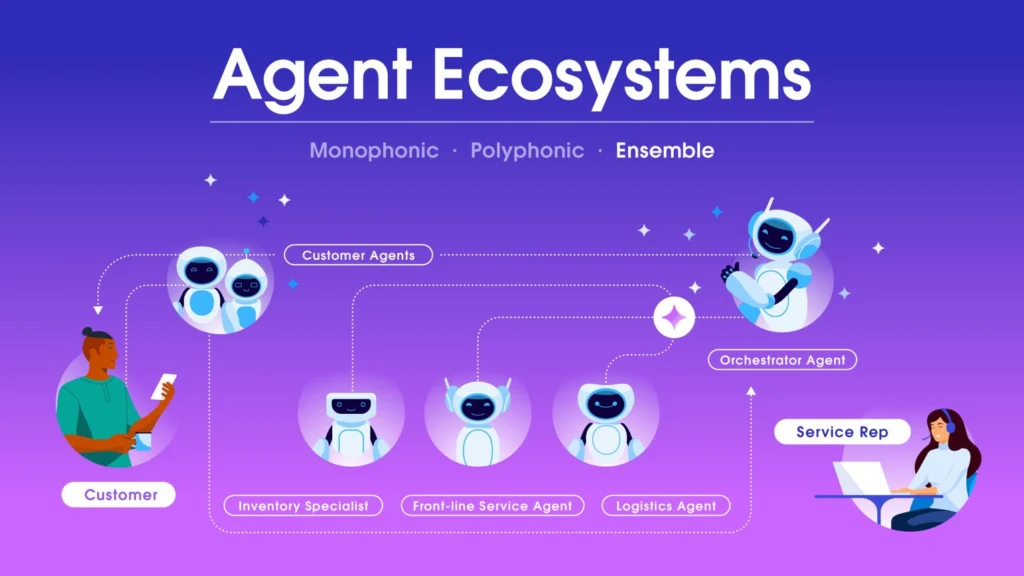
The primary benefit for customers is the end of the “wait time.” Because agents can handle thousands of conversations at once, every customer gets an immediate response.
Furthermore, because the agent is “grounded” in CRM data, the customer doesn’t have to repeat their story; the agent already knows who they are and what they bought.
For employees, Agentforce acts as a “Force Multiplier.” By handling the repetitive, boring tasks, it allows human staff to focus on higher-level work. Productivity increases because:
Agentforce provides businesses with “Intelligence at Scale.” Because the AI can analyze millions of data points across the Data Cloud in seconds, it can make recommendations that are statistically more likely to result in a sale or a resolved case. It removes the guesswork from business strategy.
To see the real value of Agentforce, we have to look at how it functions in real-world business scenarios. These use cases highlight the platform’s versatility across sectors.
Imagine a retail company during the holiday season. Instead of hiring 500 temporary staff to answer “Where is my order?”, they deploy an Agentforce Service Agent.
The agent can authenticate the customer, look up the tracking number in a third-party shipping system, and provide an update, all within seconds.
In a B2B environment, an SDR Agent can manage the “top of the funnel.” When a prospect downloads a whitepaper, the agent can instantly reach out, ask qualifying questions about the prospect’s budget and timeline, and if they meet the criteria book a meeting directly into the Sales Executive’s calendar.
A Marketing Agent can look at a customer’s recent interaction with a support agent and realize they had a bad experience.
The agent can then automatically exclude that customer from a “Review our Product” email campaign and instead send them a personalized discount code to rebuild the relationship.
Many people ask, “Isn’t this just a better version of Flow?” The answer is no. Agentforce represents a shift in logic that makes it fundamentally different from the automation we have used for the last decade.
The main difference lies in flexibility. Traditional automation is like a train on a track; if there is a rock on the track, the train stops. Agentforce is like a self-driving car; if there is an obstacle, it finds a new way to reach the destination.
AI agents are superior because they are “context-aware.” Traditional automation treats every user the same. Agentforce treats every user based on their specific history, current mood, and unique problem. It leads to a much higher “Resolution Rate,” which is the gold standard for business efficiency.
While the benefits are clear, implementing a “Digital Workforce” does come with certain hurdles that businesses must be prepared to clear.
Allowing an AI to access company data requires a high level of trust. Salesforce addresses this with the Einstein Trust Layer, which ensures that sensitive data is masked and that no data is ever stored by third-party AI models.
However, companies still need to be diligent about their own internal data governance.
You cannot simply “turn on” an agent and expect it to work perfectly. The complexity arises from:
We are only at the beginning of the “Agentic” era. As AI models become faster and more specialized, the capabilities of Agentforce will only grow.
The future of CRM is “Zero-Touch.” We are heading toward a world where the CRM maintains itself. AI agents will identify when a contact’s job title has changed, when a deal is at risk of falling through, or when a customer needs a proactive reach-out, and they will act on it before a human even notices.
In the coming years, businesses should expect a shift in how they measure success. We will move away from “Cost per Head” and toward “Cost per Resolution.”
Companies that adopt Agentforce early will have a massive competitive advantage, as they will be able to operate at a scale and speed that manual organizations simply cannot match.
Understanding Salesforce Agentforce is no longer optional for businesses that want to stay competitive. It represents the pinnacle of AI evolution, a system that doesn’t just think, but acts.
By integrating the reasoning power of the Atlas engine with the real-time data of the Salesforce platform, Agentforce allows companies to provide a level of service and efficiency that was once thought impossible.
As we move forward, the “Digital Workforce” will become as common as the email inbox. The businesses that embrace this shift now will be the ones leading their industries in the years to come.

Cloudespacio is a trusted Salesforce implementation partner headquartered in India, helping businesses transform sales, service, manufacturing, automotive, and customer operations with Salesforce.
Copyright © 2026 Cloudespacio Software Pvt. Ltd. All Rights Reserved.
